Research
In the Kirchdoerfer lab, we study a family of viruses called Coronaviruses. This diverse family of viruses includes human pathogens such as SARS-CoV-1, SARS-CoV-2 (COVID-19), and MERS-CoV in addition to a number of important animal pathogens. We use a combination of biochemistry and structural biology techniques to produce high-resolution views of coronavirus proteins, gaining insights into how these molecular machines accomplish tasks for the virus during the infection cycle. In particular, we focus on how coronaviruses enter cells and how they replicate their genomes once they get inside. To accomplish these tasks, coronaviruses produce a suite of proteins. Because some of the viruses that we study are human pathogens, many projects in the lab circumvent working with live virus entirely and instead focus on individual viral proteins produced using recombinant technologies in specialized systems. These proteins are then used in biochemical assays or imaged using an electron microscope to determine their function and structure. The long-term goals of these studies is the development of potential antiviral drugs and vaccine immunogens.
Viral Replication
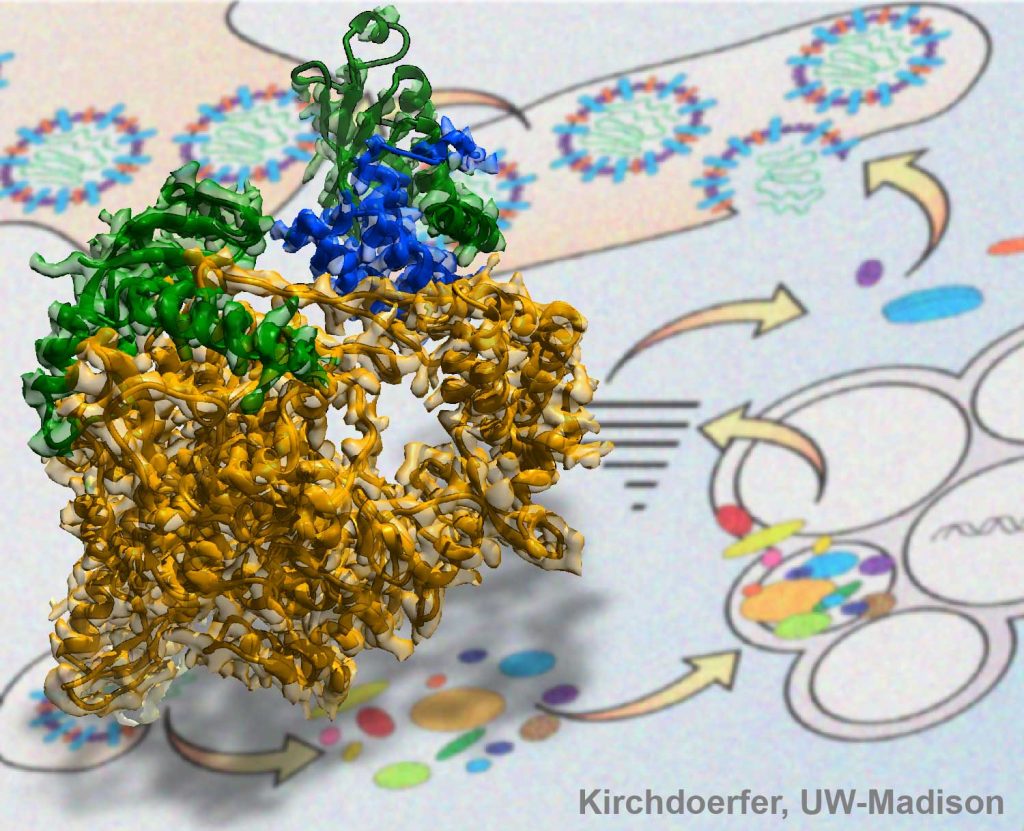
Coronaviruses possess RNA genomes and encode the necessary protein machinery to replicate and transcribe their genomes in the cytoplasm of the infected cell. These large multi-subunit complexes carry multiple enzyme active sites including a polymerase, helicase, exo- and endonucleases as well as methyltransferases. While each of these enzymes subunits has activity on its own, in the Kirchdoerfer lab, we are interested in how these subunits work together to accomplish viral replication.
Viral Entry
To initiate the infection of a cell, viruses must recognize their target cells and then fuse their viral membranes with host cell membranes, releasing the viral genome to begin replication. Coronaviruses use a protein on their surface called spike to recognize receptors on the host cell surface. The specific host receptors used varies widely across the coronavirus family. Binding of host receptors is believed to trigger changes in the structure of the viral spike protein activating spike’s membrane fusion activity. In the Kirchdoerfer lab, we are interested in the structures of spikes from across the diverse coronavirus family and how these viral spikes interact with their host receptors.
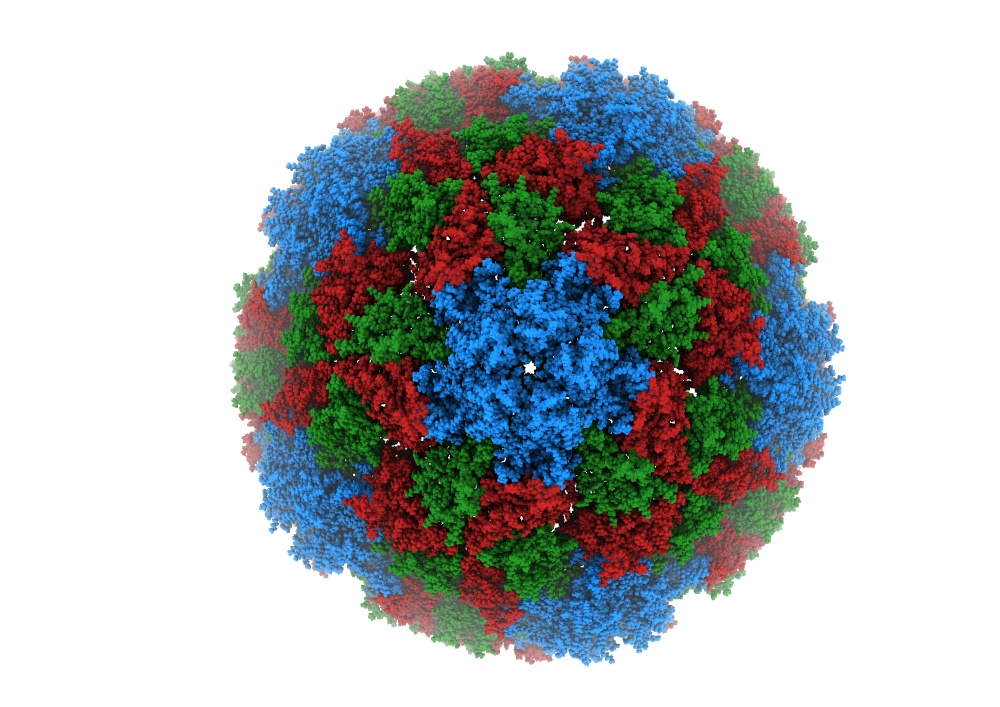
We also study the structures of rhinovirus protein capsids and how they are recognized by host antibodies. These projects are conducted in collaboration with Dr. Jim Gern at the UW Hospital.